Custom point-of-purchase displays are a great way to increase brand recognition and drive sales in your retail channel, whether it’s a supermarket, convenience store, e-commerce fulfillment center, or specialty retail shop. However, if not planned carefully, the results may fall flat. Choosing the right point-of-purchase display for your channel requires aligning purpose, audience, and location to maximize ROI.
Define our Goals and Audience
Before design starts, define what the display needs to accomplish. A custom point-of-purchase display used to introduce a new product will need different messaging, product visibility, structure, and placement than one built to move seasonal inventory or support an impulse purchase. If the objective is not clear, design decisions can become guesswork, and the finished display may look good without supporting the retail program.
The shopper should also guide the display format. Consider who is buying the product, what they already know about the brand, how much information they need at the display, and what action you expect them to take. A shopper comparing a higher-consideration product may need clear product benefits, organized merchandising, and supporting signage. A shopper making a quick add-on purchase at checkout may need a smaller display with simple messaging and easy access to products.
Channel requirements are a critical consideration. A supermarket, convenience store, club store, specialty retailer, and e-commerce fulfillment environment each has different space limits, traffic patterns, handling demands, and replenishment needs. Many retail stores have very specific requirements that must be adhered to. Defining the objective, audience, and channel early helps the display manufacturer recommend the right structure, materials, graphics, and fulfillment plan before production decisions lock in cost and complexity.
For a deeper dive, read What Brands Should Know Before Investing in Custom Corrugated Display Solutions
Determine the Display Type
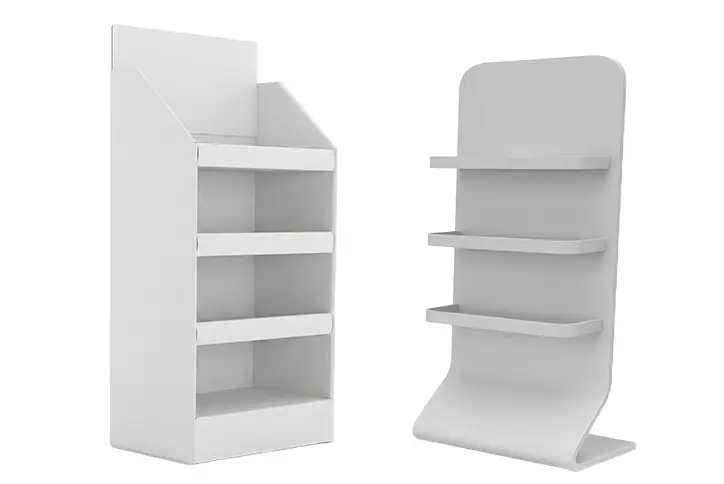
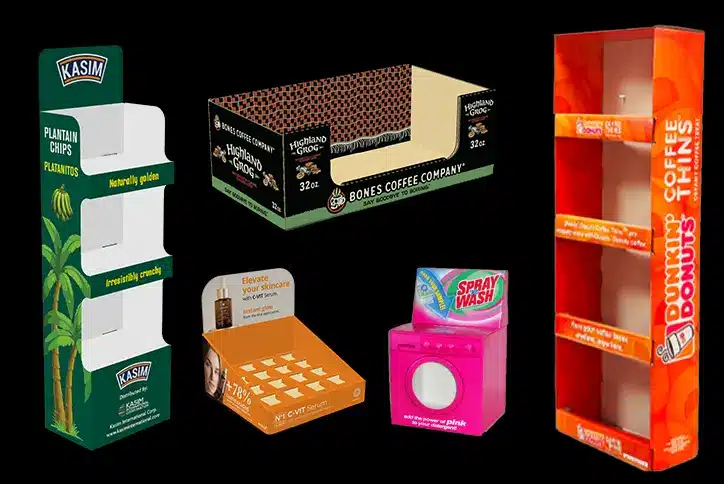
Corrugated displays can be built in several formats. The right choice depends on where the display will sit, how shoppers will interact with it, how much product it must hold, and how often store staff will need to refill it. A lightweight countertop unit may work well for a small impulse item, while a floor display or pallet shipper may be needed for heavier products, larger promotions, or higher sell-through volume.
- Floor displays and stands – Freestanding corrugated displays used in aisles, promotional areas, and other visible store locations. They are useful when the product needs more space, stronger branding, or enough capacity to support a promotion without frequent restocking.
- Countertop displays – Smaller corrugated units used at checkout counters, service counters, reception areas, and other point-of-sale locations. They fit lower-weight products and impulse purchases where quick visibility and easy access matter more than large product capacity.
- End cap displays – Corrugated displays designed for the end of a retail aisle. These units usually need to follow retailer size limits, planogram requirements, product orientation, and replenishment needs because the space is highly controlled.
- Pallet displays, shippers, and dump bins – Larger corrugated displays used for bulk products, club store programs, and high-velocity retail promotions. These formats need enough strength for shipping and in-store handling, especially when the display is packed before it reaches the store.
- Sidekicks and power panels – Narrow corrugated displays that attach to shelving or sit near existing retail fixtures. They are useful when floor space is limited but the product still needs branded visibility outside the main shelf set.
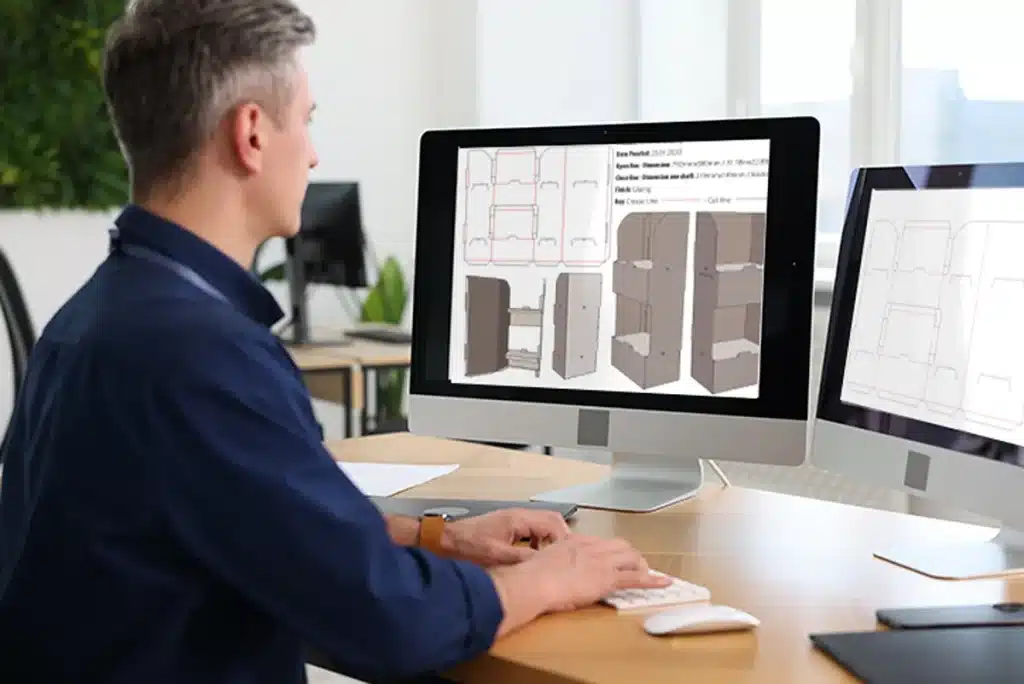
Once the display type is selected, define the product load, shipping method, assembly requirements, graphics, and store setup process. Corrugated displays can be pre-packed, shipped flat, or assembled in-store, and each option affects board grade, insert design, printing, labor, and freight costs. These details should be reviewed before dielines and graphics are finalized, so that the display fits the channel and withstands normal handling.
Design Custom Point-of-Purchase Displays for Engagement
Design should make the display easy to understand from a few feet away. Use clear, consistent branding across the header, side panels, shelf fronts, and any product-facing graphics so shoppers can quickly connect the display to the product. The brand colors, logo placement, product images, claims, and callouts should reinforce the same message rather than compete for attention.
Corrugated displays should also be designed to accommodate changes to the promotion over time. Modular or multi-use designs offer interchangeable parts that can be reconfigured in various ways, allowing customization based on available space and product type. Some corrugated displays can also use removable trays that convert into countertop displays as product sells down, extending the display’s use beyond the original floor or pallet format.
Interactive or digital elements can be useful when they fit the product, audience, and retail environment. A QR code may work if shoppers need product specifications, recipes, installation instructions, or a comparison guide. Small screens, lights, sound, or sensor-triggered features can draw attention, but they add cost, power requirements, and retailer approvals, and can distract from the brand if they fail. For many corrugated displays, a clear structural design and strong printed graphics will do more work than a digital feature that does not support the buying decision.
Consider Experience For Manufacturing Your Custom Point of Purchase Displays
An experienced corrugated display manufacturer can help ensure that the display meets your objectives and performs under real-world conditions. Experienced designers understand material science, for example, choosing the right flute type to balance cost and load capacity. Experience allows them to anticipate setup challenges, ensuring units are fully assembled, protected during shipping, and compatible with retail requirements.
Atlas Packaging brings more than 40 years of creative problem-solving expertise to every display we build. Our team works with brands to turn product requirements, retailer guidelines, graphics, fulfillment needs, and shipping demands into corrugated display solutions that can be produced efficiently and set up correctly in the field. Our experience comes into play when a display needs to hold heavy products, ship pre-packed, fit a specific retail footprint, or support multiple merchandising formats.
Ready to build a custom point-of-purchase display for your retail channel? Contact Atlas Packaging to discuss corrugated display options, structural design, printing, and fulfillment requirements for your next program.