Promotional displays are often developed for a specific product launch, seasonal campaign, or retail promotion. Once that initiative ends, the display has served its purpose and is removed from the store. While this approach works for many programs, it does not always maximize the value of the display investment.
Some brands are taking a different approach by designing displays that can support multiple products, merchandising strategies, or retail environments. A display that adapts to changing inventory, accommodates a product family, or serves more than one merchandising function can continue delivering value long after the initial promotion begins. When planned correctly, multi-function displays help brands make better use of retail space while creating greater flexibility for future programs.
Designing Displays That Evolve Throughout a Promotion
Inventory levels rarely remain constant throughout a campaign. A floor display that is fully stocked at launch may appear oversized once a significant portion of the product has sold. One way to address this challenge is by incorporating removable components. A large floor display may be designed so that a portion of the structure can be converted into a smaller counter display or point-of-sale unit. As product quantities decrease, the merchandising footprint can be reduced while maintaining product visibility.
This approach helps keep products in front of shoppers longer and allows retailers to continue merchandising remaining inventory without dedicating valuable floor space to a partially filled display.
Supporting Multiple Products Within a Single Display
Many brands offer product families rather than individual items. Hair care lines often include shampoo, conditioner, styling products, and treatments. Food brands may promote multiple condiment varieties, snack flavors, or beverage options together.
Designing a display around a complete product line can create a stronger merchandising opportunity than focusing on a single SKU and can drive more sales. For example, a display of BBQ items—charcoal, lighter fluid, etc.—placed near a meat case can create the image of grilling burgers and drive impulse purchases.
Creating a successful multi-product display requires careful planning. Product dimensions, weight distribution, replenishment requirements, and shelf capacity must all be considered during the design process. When these factors are addressed early, a single display can accommodate a wide range of products while maintaining a clean, organized appearance.
Using Modular Design to Increase Flexibility
The available space for promotional displays can vary by retailer. A display that works well in a large grocery chain may not fit within the space constraints of a convenience store, specialty retailer, or pharmacy. Creating unique displays for every situation can become costly.
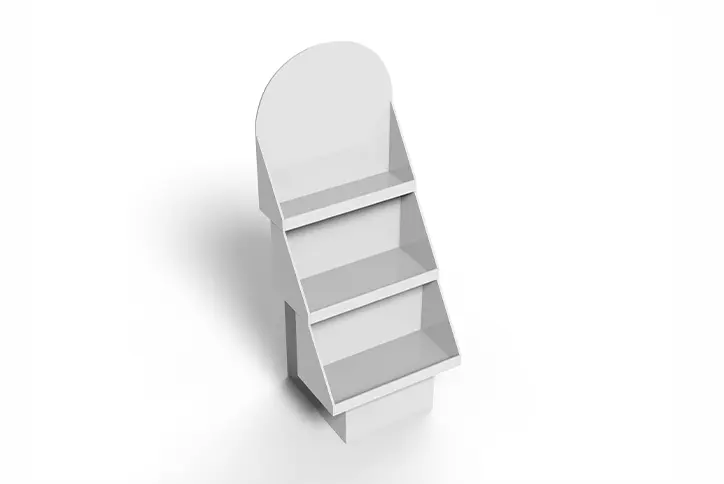
Modular display designs can help solve this problem. With a modular display, components can be added, removed, or reconfigured to suit different retail requirements while supporting brand consistency. A display program may include stackable sections, detachable product trays, or configurable merchandising modules that allow retailers to adjust the display footprint as needed.
PDQ trays are one of the most common examples of this approach. Rather than serving only as part of a larger floor display, removable PDQ trays can be placed on endcaps, checkout counters, shelves, or secondary merchandising locations throughout the store. As inventory levels change, retailers can continue to display products without dedicating floor space to a partially filled display.
This flexibility can simplify program management, improve replenishment efficiency, and allow brands to maintain product visibility even after the main display has sold down or been removed from the sales floor. IT also allows a single display to support multiple merchandising strategies without requiring separate display designs for each retailer.
Creating Opportunities for Seasonal Promotions
Many brands run multiple promotions throughout the year. Launching a completely new display for every campaign can increase costs and extend production timelines. Displays designed with interchangeable graphics, replaceable headers, or adaptable merchandising sections can support multiple promotional themes throughout the year. A display used for a spring promotion may later be updated for a summer product launch or holiday campaign while maintaining the same structural foundation. By planning for future campaigns during the initial design phase, brands can create display programs that remain relevant across multiple promotional periods.
Consider Business Objectives
Additional functionality can provide significant value, but it should always serve a clear purpose. Features that add complexity without supporting a specific retail objective can increase costs and create challenges for store personnel.
The most successful multi-function displays will provide merchandising flexibility, product visibility, or retail efficiency. Whether the goal is supporting multiple products, adapting to different store formats, or extending a display’s usefulness throughout a promotion, every design decision should contribute to a measurable business objective.
Making the Most of a Promotional Display Investment
A promotional display does not have to be limited to a single purpose. With thoughtful planning and structural design, displays can support multiple products, adapt to changing inventory levels, and serve a variety of retail environments.
For brands looking to maximize the impact of their merchandising programs, multi-function display design offers an opportunity to create greater value from a single display investment while maintaining a strong retail presence throughout the life of a promotion.
Designing Displays That Deliver Value
A multi-use promotional display only works when the structure, product fit, graphics, assembly method, and retail requirements are planned together. At Atlas Packaging, we design and manufacture custom corrugated promotional displays for brands that need displays built to promote multiple products, extend the display’s use, and meet retailer-specific merchandising needs.
Considering a multi-use promotional display? Contact us to discuss your products, retail requirements, campaign timeline, and options for a flexible corrugated display program.